Friday, 1 June 2012

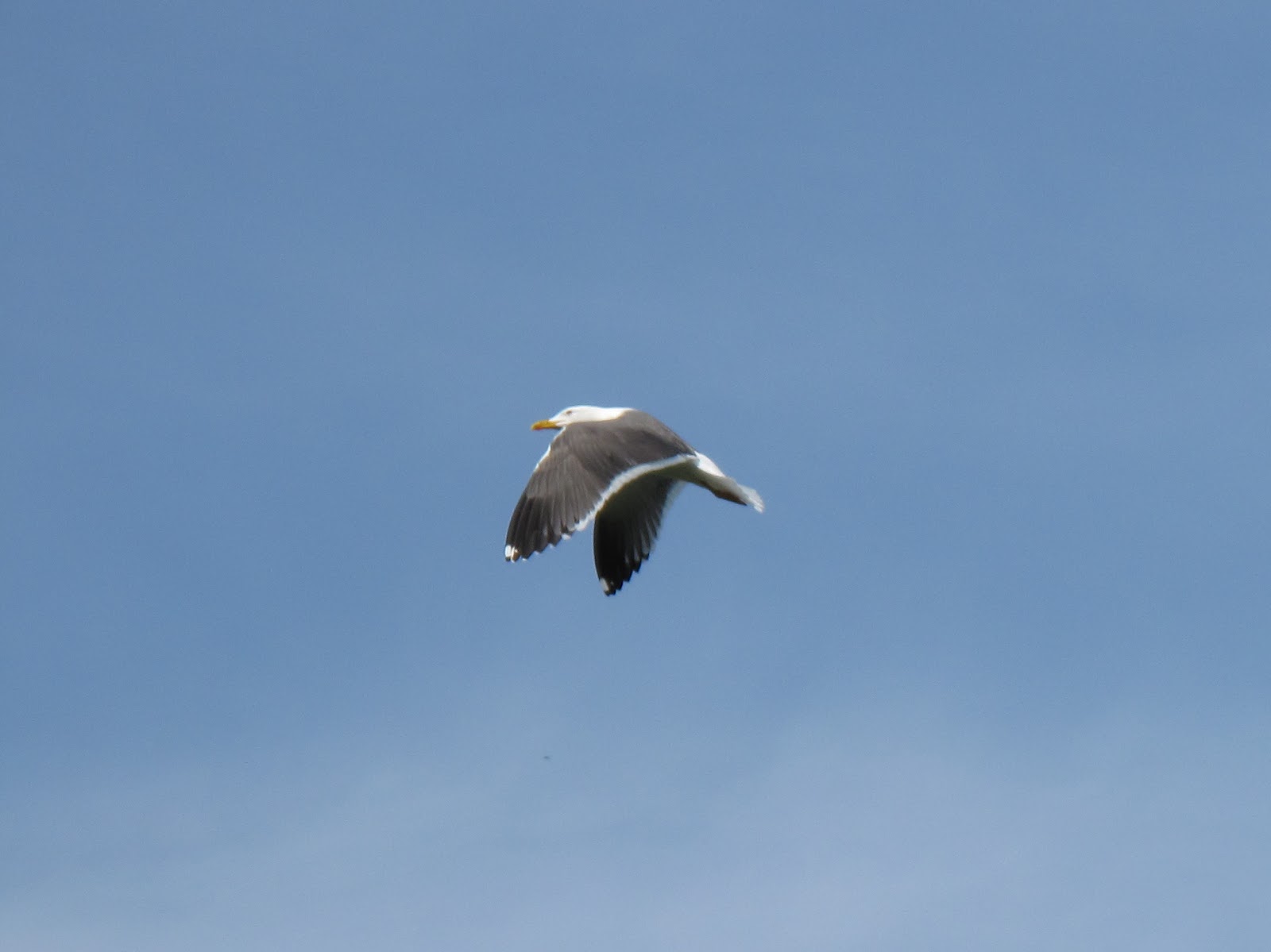
Urban Lesser black-backed Gulls

I have seen Lesser Black Back Gulls, Larus fuscus, regularly this year in the city. They are beautiful seagulls, similar to the Herring Gull, to which they are closely related, but with dark grey mantle, and yellow legs. During May I have seen them practically every day. Recently, I watched a flock in a local park, over ten birds, all adults, eating bread from the lake. They surely must be breeding in town.
The Lesser Black-backed gull is an Amber species, with some conservation concerns, however, they appear to be on the increase. Although shy, in the last few decades they have followed the Herring Gull in becoming an urban bird. A report by Monaghan and Coulson indicates that pairs have taken to nest on rooftops, with industrial and modern town centre buildings favoured as nesting locations. The first reports of roof nesting in this species are from 1969, and populations nesting in buildings are on the increase in the British Isles.


More information
Patricia Monaghan & Dr. J. C. Coulson (1977) Status of Large Gulls Nesting on Buildings, Bird Study, 24:2, 89-104. pdf here.

Tuesday, 15 May 2012

Fledglings galore

The resident birds seem to have synchronised their breeding to such extent that I saw/heard seven different species of fledglings or chicks in my way to work. A Blackbird (#1) fledgling gave a try to hunt for itself, its parents out of sight. It was hilarious to watch it picking up a dried berry and dropping it and listening for worms.

A lovely fluffy Robin (#2) fledgling by the university parking lot, still very naive, let me get quite close (top photo), a pair of Greenfinches landed next to it and had me confused for a while!
Then a pair of noisy rook (#3) youngsters by the university woodland area demanded to be fed, I could only get a poor shot.

The family of Wrens (#4) I pictured a couple of posts ago were still around, the young giving their calls from a bed of nettles and docks opposite the Wilberforce building.
In my way back from work, a lovely family of Long Tailed Tits (#5) 'see-see-seeing', but the young ones shun me and only gave me their tails to photograph.

In my kids school, the Blue Tit (#6) eggs have finally hatched and I watched the live footage, with one of the parents sitting on very hungry and bare chicks
Near home, the Starling (#7) adults and youngsters in the nest have starting calling to each other with their 'churrr' calls which mean that they are almost ready to leave their nests.

Thursday, 10 May 2012

Alarmed wrens

A pair of Wrens in the wildlife garden called their rattling alarm calls. I am always intrigued by alarm calls. Many alarm calls are directed to the bird watcher, as we approach a nest or a bird more than it is comfortable with. In this case, the birds were directing their attention to a cat, which was going about its business in the undergrowth. The pair of wrens moved constantly around, chattering nervously. A Goldfinch sat on a branch paying a lot of attention, but keeping quiet. On the top is my best shot of one of the Wrens, and you can see a little video here.

Wren fledglings


I heard some thin calls coming from a thicket in the University Wildlife Area. Two alternating calls, probably coming from two recenlty fledged chicks. Chicks calling alternatively are incredibly difficult to locate as each call makes you look in a different direction. I spotted an adult Wren giving an alarm call nearby and waited. Eventually an adult approached one of the chicks to feed it and I could see where it hid. The chicks were sitting inside some nettles. I could only get a poor shot, but it shows the yellow rim of the mouth typical of chicks.

Mrs Black

This female Blackbird sat on a fence unfazed by my presence. She looked one way and the other while I approached and took her portrait and when I left she was still there.

Friday, 27 April 2012

The crows have frog for dinner

The pair of crows on our street has been late building its nest. After a lot of territorial fights with their neighbours, they only started last week, on top of a lime tree, but the nest looks like it is now finished. One of the pair was sitting on the nest this afternoon, and kept calling softly, made me think of the way rooks caw. The other flew to the roof nearby carrying something floppy. I thought it would be a strip of bark, which they often use as lining material, but when the crow started pecking it hard and lifted it I saw it was a frog. The crow on the nest - presumably the female- was obviously very excited about this, flew close and started flapping her wings, calling pleadingly, while the first crow fed. I couldn't see if the frog changed hands (claws?) but in crows females incubate the eggs and the male is in charge of feeding her so it wouldn't surprise me if she also had frog for dinner.
The male feeds on the frog

The pleading crow

Monday, 5 March 2012

The Herring Gull pair at The Rock

More often than not there will be a Herring Gull pair by the pond in my local park. I assume it must be the same pair, as seagulls are long-lived birds and they behave in an aggressive way to immature gulls that land near the pond. This pair likes a particular spot which I call "The Rock", a vantage point on a promontory on the edge of the pond, and both individuals often stand there side by side.
 Today, a gang of excited Mallard males were giving chase to a female and one of them started mating with her. This behaviour is common in Mallards and is known as forced copulation, where there is no display and the female is corralled by males who are not their partners and forced to mate. The gull, which was very close, saw this, walked to the mating pair, and pecked the male! Not just a gentle peck, no, she even got some feathers out of him. This was a bit too much for the drake, his passion was quickly dispelled, he dismounted the female immediately and walked away a bit ruffled while the other drakes watched. Everything happened fast and I only had time to take a shot of the last part of the scene (below).
 Ouch!
The pair of Herring Gulls at the Rock 
Some twenty minutes later I noticed the pair were calling noisily with their miaowing calls, they were feeding on something on the ground. An egg! By the look of it it was a duck's egg all cracked and its contents spilled on the path. When I went to check, it had all the looks of an infertile egg. Still, the seagulls took turns feeding on it.
 One of the Herring Gulls feeding on the egg
The spilled egg